
The Pros and Cons of Hiring a General Contractor for Renovations- Do You Really Need One?
In this post, I want to talk about the pros and cons of hiring a general contractor for renovations or remodels of any size. This was something we researched thoroughly long before starting our own project. At first, we planned to hire one, but after interviewing several contractors, we ultimately decided against it. The short answer is simple: you absolutely do NOT need to hire a general contractor.

I’m going to share how we managed our entire renovation from start to finish without relying on a general contractor for even a single second, and why you can do it too. I handled everything, from designing each space to ordering materials, hiring contractors, coordinating with them, and so much more.

Matt’s schedule is so demanding and unpredictable, and he has very little flexibility during the day. So I knew from the beginning I couldn’t count on him to oversee anything daily. So, if this renovation was going to happen, it was entirely up to me to make it happen. In this post, we’ll outline what you should know before deciding which route is right for you.
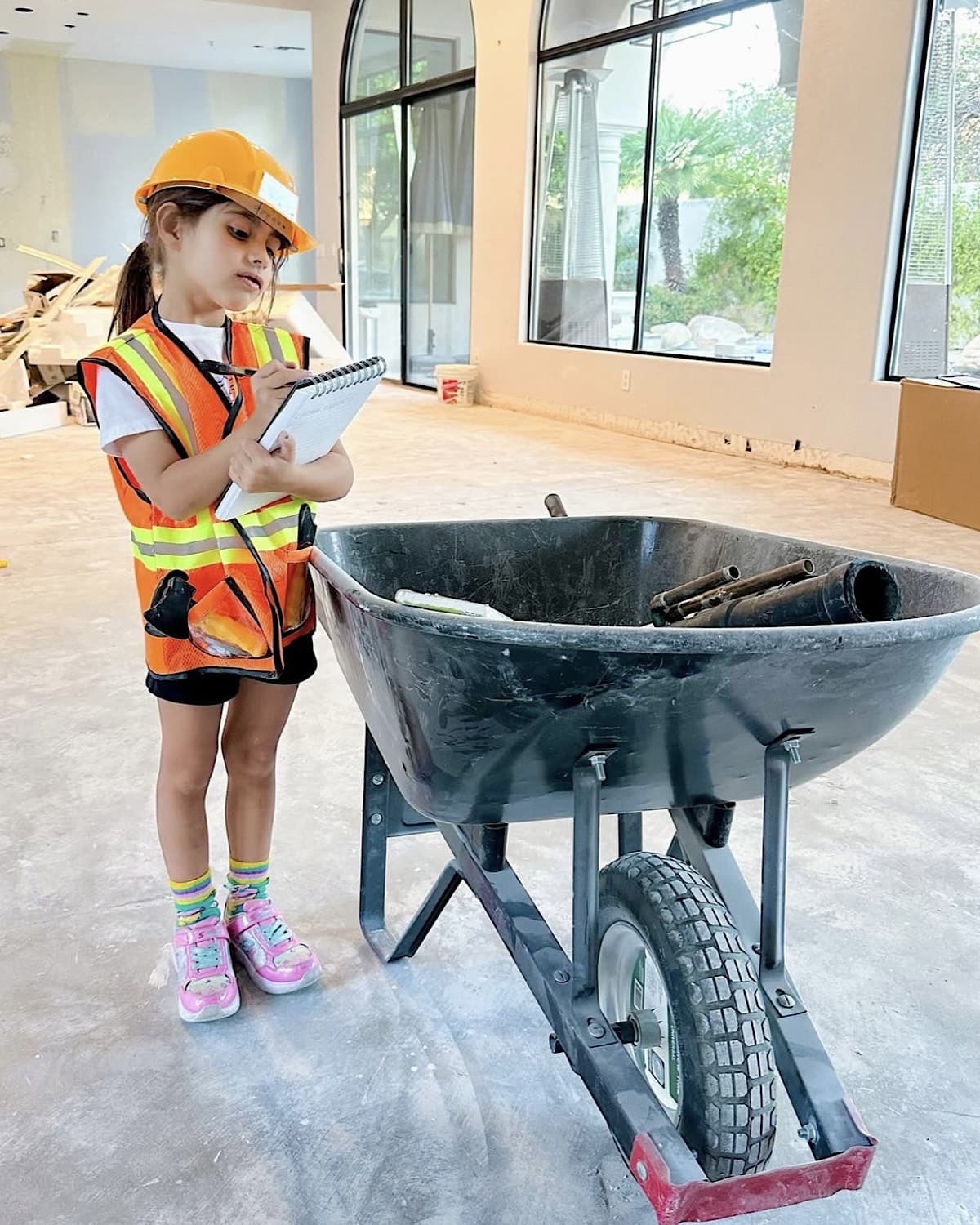
No matter if you’re single, married, have little kids, big kids, or an entire family to juggle, you can absolutely manage a renovation on your own. The key is knowing what to expect, staying organized, and understanding the pros and cons I’m about to share with you here.
What Is a General Contractor
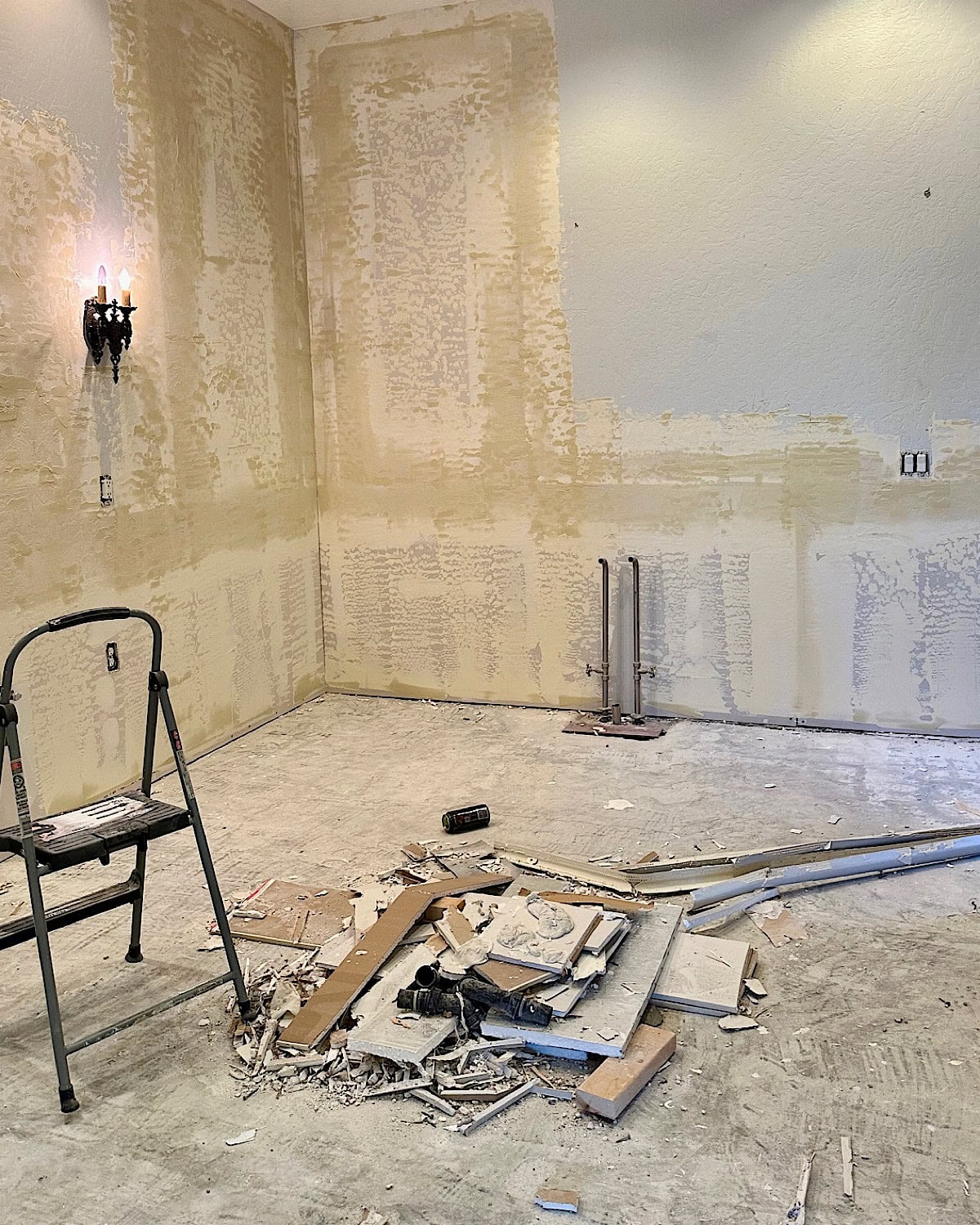
A general contractor (often called a GC) is the person you hire to take full responsibility for running your renovation project or building a home, whatever you’re working on. Think of them as the ultimate project manager who oversees everything. Essentially, you hand them your house key, walk out, and they return the key to you when everything is done.
When you first meet with a general contractor, they’ll sit down with you to understand your project, your goals, and your budget. They’ll ask if you already have a designer or architect, and if you do, they’ll work closely with them from the very beginning through to the final completion. From there, the GC becomes the hub that connects every moving piece of your renovation.
How Much Do General Contractors Usually Charge?

On average, general contractors typically charge around 20% of the total project costs as their fee. For example:
- If your renovation costs $1,000,000, their fee would be about $200,000.
- If your renovation costs $700,000, their fee would be about $140,000.
- If your renovation costs $500,000, their fee would be about $100,000.
- If your renovation costs $250,000, their fee would be about $50,000.
- If your renovation costs $100,000, their fee would be about $20,000.
- If your renovation costs $50,000, their fee would be about $10,000.
Here’s how it typically works:

- Flat percentage markup: Most GCs charge between 15% to 20% of the total project price, but in most cases, you should expect it to be closer to 20%.
- Built-in markups: Beyond the fee itself, many GCs also add hidden markups on subcontractor bids and materials. That means flooring, cabinets, tile, or plumbing fixtures might cost you more through them than if you purchased directly.
- Project size matters: On smaller projects, the percentage can feel even higher since the GC’s role doesn’t change much. On larger projects, while the rate remains the same, the actual dollar amount becomes significantly larger due to the overall cost.
So, depending on the size of your renovation, the GC’s fee alone can range from tens of thousands to hundreds of thousands of dollars.
Here’s What a General Contractor Typically Handles

Working with designers and architects: Sitting down at the beginning to review your vision, coordinating with your designer or architect, ensuring the design is realistic, functional, and aligned with building codes.
Handling permits and approvals: Filing all paperwork with the city or county, pulling permits for construction (especially when it comes to structural changes, plumbing, or electrical work), and scheduling inspections at the right stages so your project stays legal and on track.
Ordering materials: Managing every supply list and making sure nothing slips through the cracks. This includes flooring, tile, plumbing fixtures, faucets, sinks, vanities, kitchen cabinets, countertops, backsplashes, lighting, appliances (such as refrigerators, ovens, microwaves, and dishwashers), shower glass, paint, HVAC equipment, and more. They place orders, track deliveries, and make sure materials are available when needed to keep the project moving.
Managing budgets and contracts: Creating bids, negotiating with suppliers, tracking expenses, and paying subcontractors. This covers multiple categories such as flooring companies, tile installers, bathroom contractors, kitchen suppliers, electricians, plumbers, painters, HVAC contractors, appliance companies, and more. The GC makes sure each contract and payment is lined up correctly to avoid delays or disputes.
Hiring All the Subcontractors: Selecting and coordinating the right tradespeople, including electricians, plumbers, painters, flooring installers, tilers, stone fabricators, cabinet installers, and glass/mirror specialists. The GC vets their work, hires them at the right time, and makes sure they complete their part of the project.
Scheduling and coordination: Organizing all subcontractors so they arrive in the proper sequence. For example, the plumber and electrician must complete the rough-ins before drywall is installed, or the countertops can’t be measured until the cabinets are in place. The GC keeps this order running smoothly.
Daily project oversight: Being on-site (or checking in every single day) to review progress, answer questions, troubleshoot problems, and make sure everyone knows what to do next.
Quality control: Ensuring all work is done correctly and up to code, meets design expectations, and is built to last. They are the ones responsible for catching mistakes before they become bigger, more expensive issues. Problem-solving: Handling the unexpected things that always happen during a renovation, such as back-ordered materials, design changes, hidden water damage, or construction mistakes. The GC comes up with solutions quickly to prevent long delays.
Final completion and walkthrough: Making sure every detail is finished, the house is clean, and everything is working correctly before handing the keys back to you. They’ll often walk you through the process to make sure you’re satisfied before closing out the project.
Pros of Hiring a General Contractor
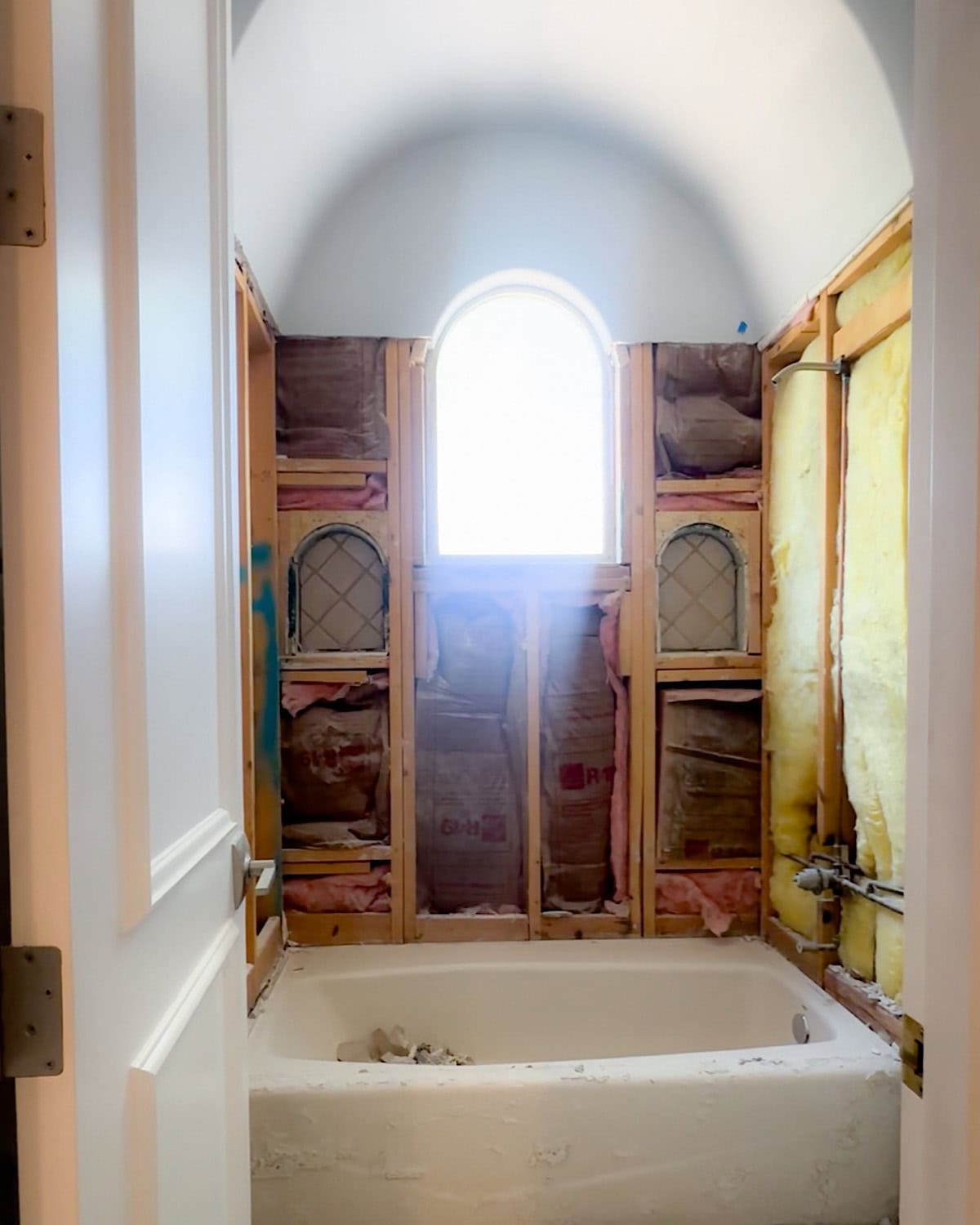
There are definitely some upsides to hiring a general contractor. For a lot of homeowners, the biggest pro is the simplicity. You hand over your house key, walk away, and when the project is finished, the GC gives you the key back. Everything in between is their problem, not yours. If you’re busy, don’t want the stress, or just don’t want to deal with a million details, this can sound very appealing.
Here are some of the main pros of hiring a general contractor:
- One main point of contact: Instead of juggling calls with ten different subcontractors, you only talk to your GC.
- Less stress and hassle: You don’t have to coordinate schedules, order materials, or chase people to show up. The GC handles it all.
- Permits and paperwork: Building permits, approvals, and inspections can be overwhelming. A GC deals with all of that for you.
- Project scheduling: They line up subcontractors in the proper order to ensure the project stays on track.
- Problem-solving: If something goes wrong (and it usually does), the GC figures out a solution so you don’t have to.
- Time savings: Since they manage the daily details, you don’t have to spend your own time on-site.
- Convenience: They handle the headaches, and you get to focus on your own life.
Basically, if your priority is to have someone else deal with the stress of a renovation, and you’re okay with them communicating with your designer and carrying out the plan for you, then a GC can be worth it. You hire them to worry so you don’t have to.
Cons of Hiring a General Contractor

While there are definitely some conveniences, we quickly realized that hiring a general contractor also comes with a long list of cons. After interviewing multiple companies, from huge (super well-known builders and renovation firms) to smaller contractors, here are the most significant issues we ran into:
- Lack of transparency in pricing: Many GCs bundle costs into vague categories like “kitchen” or “bathroom” without breaking down what’s included. For example, they’d quote a large lump sum for the kitchen without specifying how much was allocated for cabinets, appliances, counters, or fixtures.
- Hidden markups: General contractors often add hefty markups to materials and subcontractor work. You can end up paying “premium” prices without even knowing what level of quality you’re actually getting, which, for the most part, often turns out to be much cheaper products.
- Favoritism with subcontractors: Many GCs work with the same contractors over and over. While that can mean familiarity, it also means they often favor their “preferred” people- sometimes at the expense of quality or fair pricing.
- Lower-quality materials at high prices: Even when we received itemized breakdowns, the quality of the materials quoted was often medium to low grade, while the pricing was at a premium level.
- Fancy showrooms, disappointing reality: Some of the biggest firms had gorgeous showrooms to impress potential clients, but when it came down to actual products and finishes, what they were using didn’t match the premium image at all!
- Contracts that aren’t clear: One large company we had signed on with charged us a hefty fee for an architectural plan, but never even sent us the blueprint. When they finally shared the numbers, the breakdowns were still incredibly vague and provided no details about the quality of what was included. That was a major red flag for us, and we immediately terminated the contract.
- A feeling of dishonesty: Not every contractor is dishonest, but after interviewing at least 10–15 companies, the lack of clarity and transparency gave us major concerns.
Why General Contractors Didn’t Feel Right for Us

Besides all the pros and cons I listed above, we also reached out to people we personally knew, from neighbors to friends, who had recently finished big renovations. The overwhelming feedback was the same: 99% of them were disappointed with the quality of products their GC chose.
Many felt they paid top-tier pricing but ended up with mid-range or low-quality materials. And one of the most shocking things we heard from nearly all of them was about a section in their final bill labeled “miscellaneous.” In some cases, that line alone added up to several thousand dollars, with no clear explanation of what it even covered.
That feeling of dishonesty, paired with hidden costs, vague breakdowns, and the use of low-quality materials while selling them to clients as “the best quality” (when our own research showed otherwise), was what really turned us off.
What made it even more disappointing was that we saw the same inconsistency across the board, from huge renovation companies and builders to medium-sized firms and even small contractors. After months of interviews, we just didn’t feel comfortable signing with any of them in our hearts.
How I Took Over Managing Our Project Instead of Hiring a General Contractor

Now that you understand why we chose not to hire a general contractor or go with one big renovation firm or builder for our extensive renovation project, I’ll share how I took over from there. As I mentioned earlier, I knew that if I managed this project, the workload would be mainly on me. Simply because I couldn’t rely on Matt’s demanding schedule. So, I began researching different companies for each part of the renovation.
Turning Ideas Into Real Plans for Every Room

To be honest, there were two aspects of this project that I enjoyed most: the design aspect and visiting different showrooms to explore the latest trends, colors, textures, and finishes. I truly loved that part of the process!
I always say that if I were born again, instead of getting my MBA, I’d study interior design. I absolutely love pulling colors, textures, and finishes together to design a room, a space, or even an outdoor area. It’s honestly my biggest passion.
Before contacting any companies, I focused on design. I spoke with Matt, and we even included our kids in the design of their rooms, taking into account what they wanted, what they liked, and what they didn’t.
I dreamed up ideas for the kitchen, bathrooms (each one), the living room, hallways, and even a former dining area we wanted to turn into a lounge/wine room. I also started sketching plans for our master bedroom, the kids’ rooms, and the laundry room. There were many different spaces to design, but honestly, this was the part I LOVED the most and was most excited about.
Keeping Renovation Design Simple and Organized

I’ll be writing a separate blog post all about how I designed each space, from the inside to the outside, and the apps and tools I used that made the process so much easier. Meanwhile, you can read some of the Game-Changing Interior Remodel Tips and Ideas from our own renovation.
There are honestly endless design apps available these days that make your life so much easier! However, for now, I’ll simply say that the first thing I did was compile design ideas for every room from Pinterest and Instagram.
I created vision boards and organized everything on my iPhone by making folders, each one named for a specific space. That way, I could quickly pull up ideas for the kitchen, bathrooms, bedrooms, and more, without getting overwhelmed.
Interviewing and Researching Companies for Each Phase
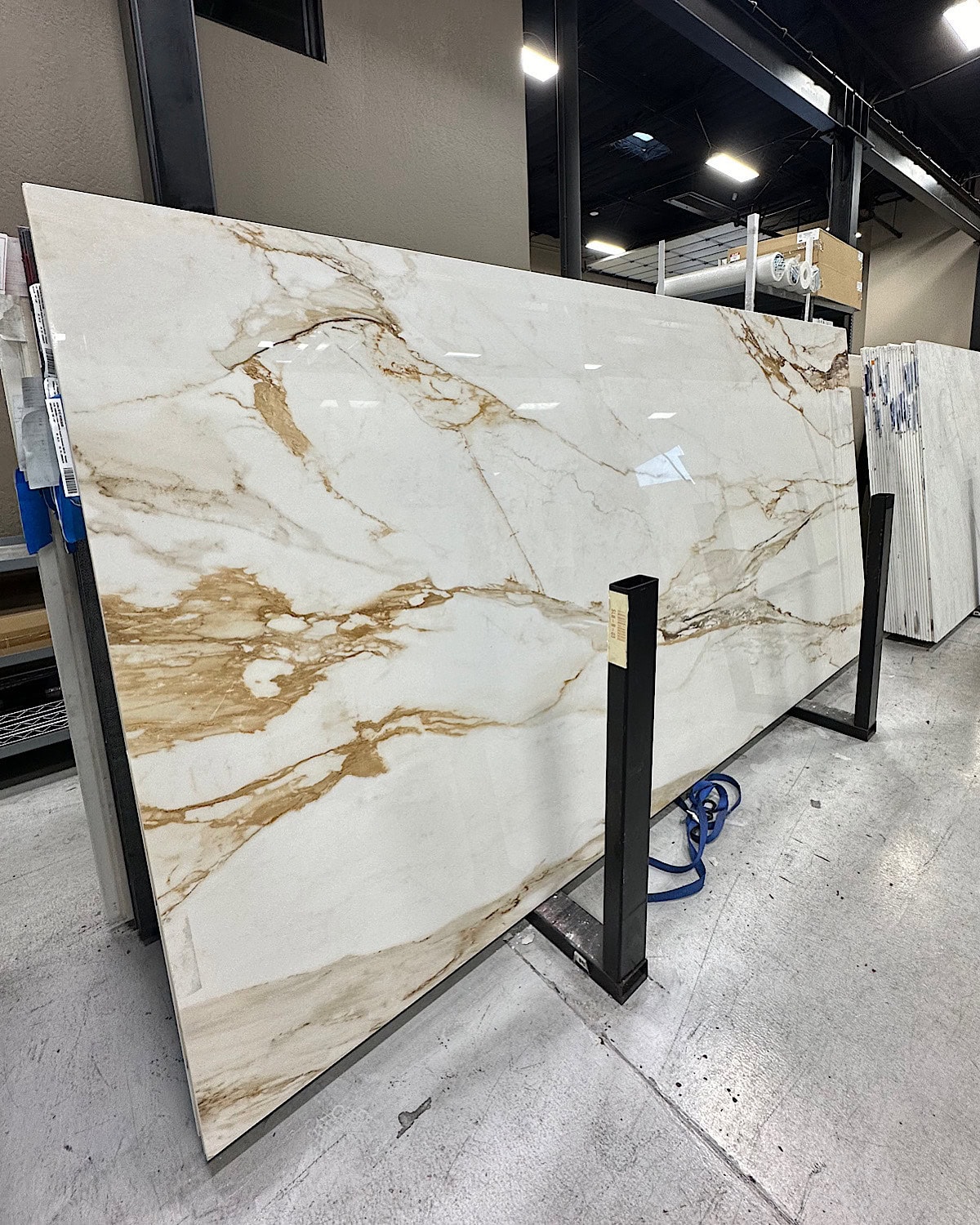
I had so much to share about this part that I actually wrote a separate blog post dedicated entirely to it. In that post, I walk through exactly how we vetted different companies for each part of the renovation. It was honestly too long and overwhelming to fit into just this one. LOL! I highly recommend reading it if you want a deeper look into the process; however, I can provide a brief overview here.
If you’re managing your project yourself, this is one of the most critical steps. It can truly make or break your home when it comes to design and execution. Choosing the right company to bring your vision to life matters so much more than just picking someone who “says” they can do it. You can’t just go with any random company or small contractor and hope for the best.
In that other post, I also shared our past experiences with smaller remodels and why those lessons shaped the way we chose companies for this major renovation. It really highlighted the importance of thorough research, asking the right questions, and ensuring you’re hiring the right people from the start.
Red Flags & Mistakes Homeowners Make When Hiring a General Contractor

One of the biggest lessons we learned during our research, as well as from speaking with neighbors and friends, is that there are some clear red flags to watch out for when it comes to general contractors. Unfortunately, many homeowners don’t notice these warning signs until it’s too late. Here are some of the most common ones to look out for:
Red Flags to Watch For…
- Vague estimates and breakdowns: If a contractor provides a lump sum, such as 50k, 100k, 200k, etc…, for the kitchen, without itemizing the components (cabinets, counters, appliances, and labor), that’s a red flag. Transparency matters.
- Unclear contracts: Watch out for contracts filled with generic terms like “miscellaneous.” That’s often where hidden costs pile up (and that SO MUCH)!
- Pushing their preferred subcontractors: A GC who insists you use only their “guys” may be prioritizing relationships or markups over quality. You really need to watch out.
- No references or reviews: A reputable GC should be able to provide references and have visible reviews online.
- Too-good-to-be-true pricing: If their quote is drastically lower than everyone else’s, chances are the quality (or honesty) won’t match the price.
- Poor communication: If they’re already hard to reach before you sign, imagine what it’ll be like once the project starts.
Common Mistakes Homeowners Make

- Not asking enough questions: Many people feel awkward pressing for details, but the more questions you ask, the more transparency you’ll get.
- Skipping research: Choosing the first contractor you meet (or one recommended by a friend) without comparing others is a risky decision.
- Not checking licensing or insurance: This step is crucial. If something goes wrong, you need to be protected.
- Trusting the showroom: Beautiful showrooms don’t always equal quality work in your home. Always ask to see real completed projects.
- Not clarifying change orders: Make sure you understand how changes will be handled, because mid-project changes can become shockingly expensive.
Pros of Being Your Own General Contractor

As a couple, we decided it would be fine for me to take on the role of managing our renovation myself, and honestly, there were a lot of upsides. Looking back, I’m very, very pleased that I took charge because, by nature, I like to be in control, I’m detail-obsessed, and I had such a clear vision for how I wanted our home to look and feel.
- Full design control: The textures, finishes, and overall look turned out exactly how I envisioned them. One of the things I didn’t like about interviewing general contractors was how often they tried to impose their own ideas on us, based on what they liked. I wanted to be in charge of our own ideas, and by taking the lead, I was.
- Transparency in materials and costs: Instead of trying to decode vague invoices, we knew exactly what we were paying for. I researched everything (I’m a total research fanatic when it comes to quality and product comparisons) and ordered all the materials myself. That way, I could be confident we were buying high-quality products directly, without paying someone else’s markup.
- Choosing the right companies: I personally interviewed and vetted every company we worked with, including those for flooring, cabinets, bathrooms, fireplaces, doors, and more. I checked reviews, asked questions, compared options, and only moved forward with the companies we trusted.
- Budget control: Even though it took more time and effort, we knew exactly where every dollar was going. There were no hidden markups or vague charges, which gave us the freedom to spend more intentionally on the things that mattered most — quality installation, premium products, and appliances we truly loved — without feeling like we were compromising.
- Flexibility: Renovations always involve changes, and managing them ourselves gave us the freedom to make those adjustments immediately. We didn’t have to wait on layers of approvals or risk a contractor telling us no; we could pivot and keep moving.
- Personal satisfaction: At the end of the day, it was incredibly rewarding to know that we managed this entire renovation ourselves. I coordinated the contractors and oversaw the project day-to-day, but Matt played a big role, too. I constantly ran ideas by him, and he was always part of weighing the pros and cons of each company, material, or design choice. While I was the one running the show, we were in it together, and the final result feels even more special because of that.
Cons of Being Your Own General Contractor

As much as I’m happy I managed our own renovation without hiring a general contractor, I’m going to be honest with you, it wasn’t all smooth sailing. Especially in our case, with two little kids in school, I was juggling their schedules, homework, and activities while also managing my own work in blogging and content creation.
On top of that, we had to live outside of our home during the renovation, moving between hotels and Airbnbs, constantly packing and unpacking. Between running the house, managing family life, and overseeing the renovation, it was definitely stressful. This was not an easy job, but if I had to do it all over again, I would still be the one managing our renovation, every single time.
Here Are Some of the Main Challenges I Faced

- Time-consuming: Managing a renovation is basically like a full-time job. Between phone calls, emails, site visits, and constant decision-making, it consumed a huge part of my days.
- All responsibility falls on you: Without a GC, there’s no one else to step in if something goes wrong. If a company missed a measurement, a delivery was late, or an installer didn’t show up, it was on me to fix it.
- Coordinating schedules: One of the most challenging aspects was arranging subcontractors in the correct sequence. Flooring couldn’t be installed until the demo and leveling were completed, cabinets had to be in place before the counters could be measured, and so on. Keeping that sequence running smoothly was a stressful task.
- Decision fatigue: From faucets to flooring to cabinet pulls, there are hundreds of micro-decisions in a big renovation. Some days, I honestly felt like my brain couldn’t make one more choice.
- Unexpected issues: Despite my extensive research, surprises still arose, including back-ordered materials, measurement mistakes, and unforeseen fixes. Each one required quick problem-solving to keep things moving.
- Emotional toll: Renovations are stressful in general, but doing it all myself added another layer. There were days I felt burned out or second-guessed our decisions. LOL!
Final Thoughts
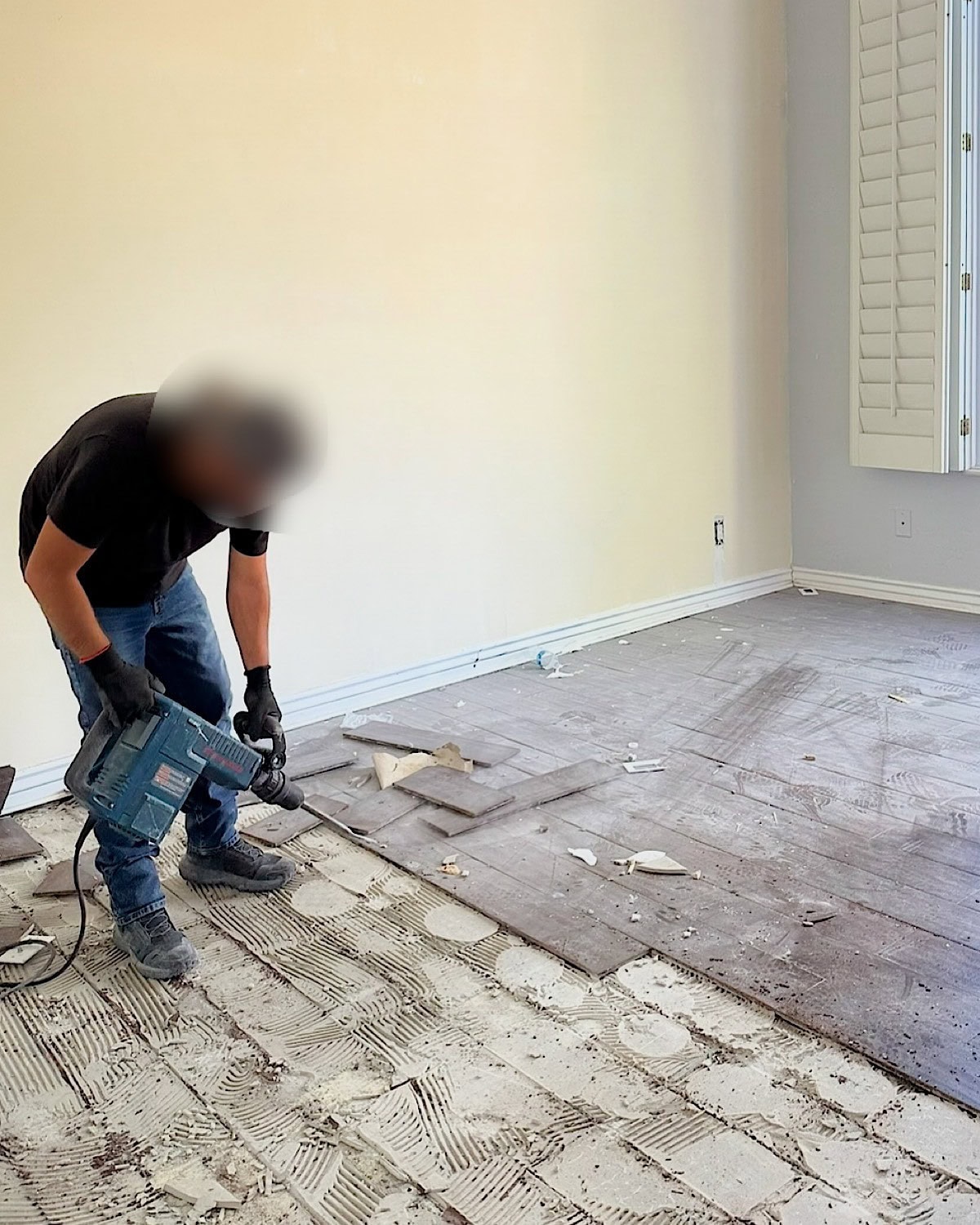
To be honest, my final thoughts on hiring a general contractor for renovations versus doing it yourself are simple: it all depends on YOU!!! Whether or not you hire a general contractor ultimately comes down to your personality, lifestyle, and the level of control you want to have in your renovation.
From my own experience, I can say with confidence, YOU CAN DO IT YOURSELF!!! However, you must first know yourself. If you’re organized, detail-oriented, and willing to stay on top of things, you’ll be fine. I’m naturally a very organized person, and I kept multiple spreadsheets, charts, and notes to track every expense, estimate, and change order throughout the project. That level of organization helped me feel confident that nothing slipped through the cracks.
I honestly love using Excel and Google Sheets in my content creation and blogging work, so it felt natural to use them for our renovation as well. Having everything tracked in one place really helped me stay on top of it all. But that doesn’t mean you have to do the same. Any system that keeps you organized, even a simple notebook, works just fine.
At the same time, if you know you’re not the type who wants to juggle all the moving parts, or you’re more flexible and happy to let a GC and designer make decisions for you, then hiring a general contractor may be the better fit. Neither choice is “right” or “wrong”; it’s all about what feels right for you.
Renovations are demanding, and yes, they can be stressful. However, they’re also exciting, rewarding, and ultimately SO worth it. Whether your project is a massive renovation or just a minor remodel, you can take it on yourself if you’re organized and prepared. And if not, a general contractor can absolutely take that weight off your shoulders.
At the end of the day, simply enjoy the process, have fun with it, and take pride in the home you’re creating. I hope this post has helped answer some of your questions about what’s truly involved in a renovation and provided you with helpful ideas and guidance for your own renovation journey.
Love,
Sherry XOXO